
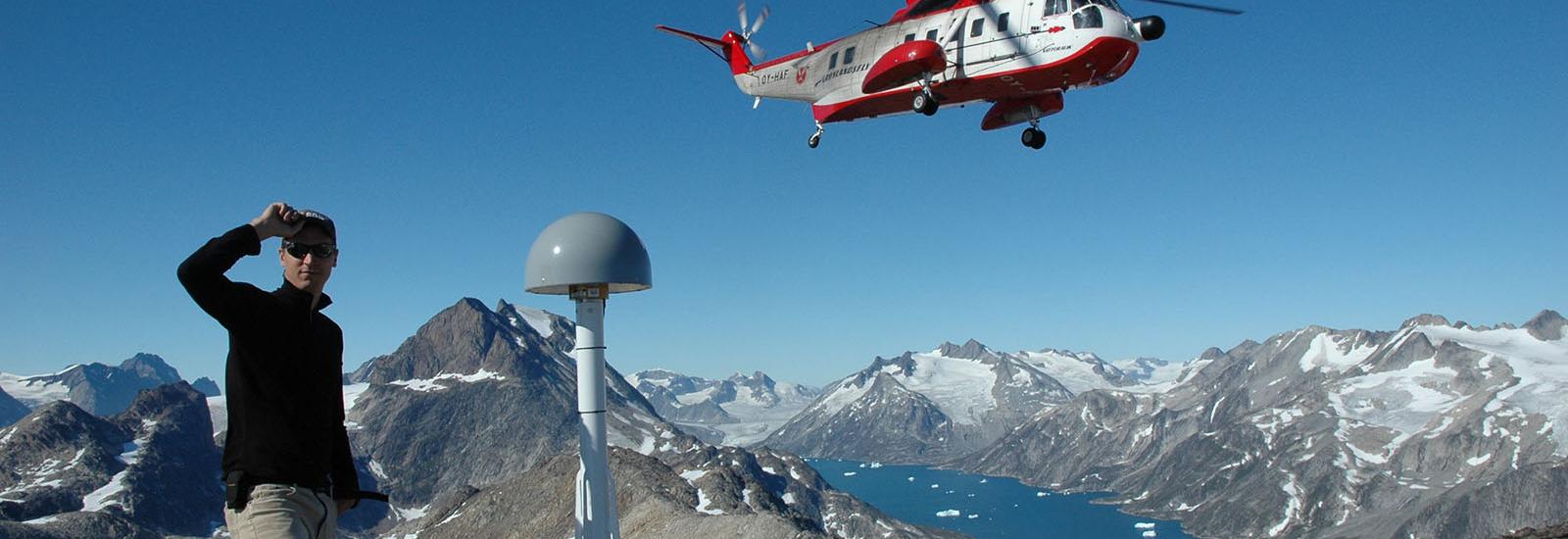
The Division of Geodetic Science welcomes students, faculty, staff, alumni, and anyone interested in the Geodetic Science program at Ohio State University. Our Division within the School of Earth Sciences emphasizes the multidisciplinarity that geodesy today enjoys and nurtures, especially in the Earth Sciences. One has only to follow the developments of the Global Geodetic Observing System (GGOS) to realize that geodesy touches almost every Earth system, from climate change to crust deformation to ocean and continental hydrology change with the consequent natural hazards and environmental impacts that affect our lives today and in the future. Our graduate academic programs are designed to provide a geodetic base, as well as direct connections to these high profile areas of research, by offering traditional as well as specifically tailored curricula toward the fulfillment of M.S. and Ph.D. degrees.
We build on our over 70-year heritage at OSU and with our placement in the School of Earth Sciences we are able to expand our program into new areas that are founded in scientific inquiry into our planet, how its many facets operate and interact, and how this understanding will help us solve and deal with environmental and geohazard problems. We hope that our program piques your interest and that we may assist you to learn more and become part of an increasingly important area of research and scientific study.