
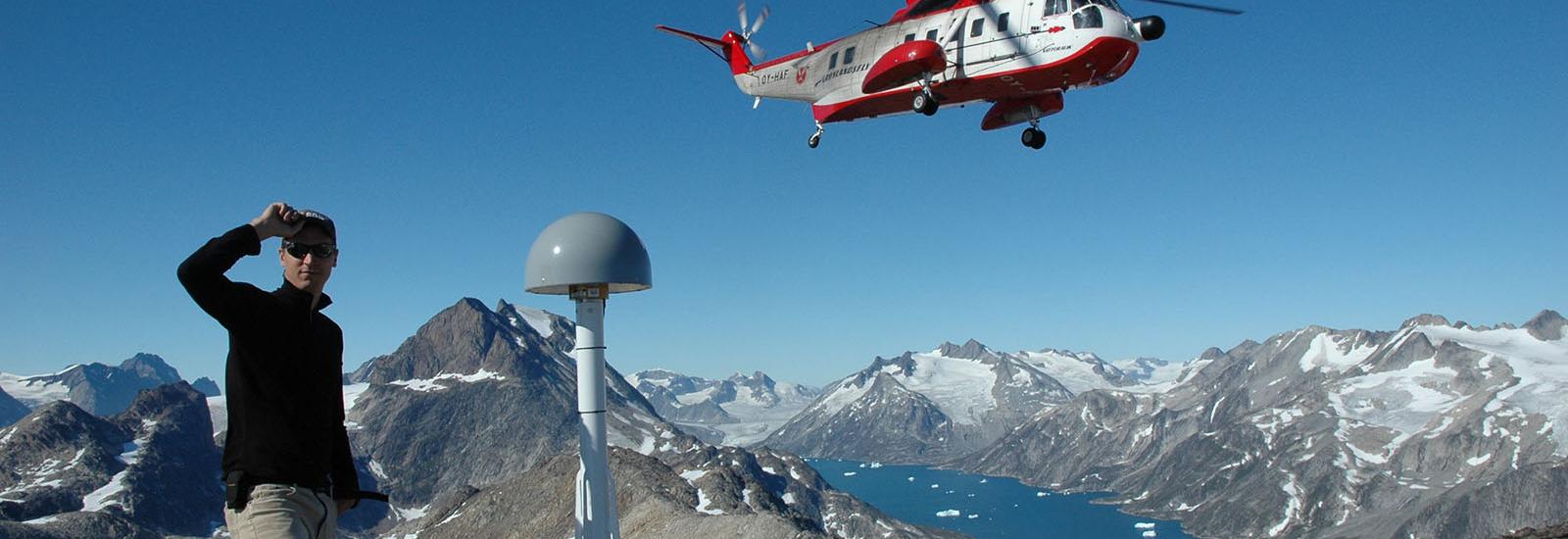


Geodetic Science and Surveying Program
The Division of Geodesy & Geospatial Science, School of Earth Sciences, (together with faculty at Department of Civil & Environmental Engineering & Geodetic Science) offers the following areas of specialization within the Geodetic Science & Surveying Graduate Program at the graduate level: geodesy, photogrammetry, mapping/geographic information science, mathematical geodesy, and geodesy & geodynamics track.
Each student selects a program of study in consultation with an academic adviser. There are four recognized M.S. options available: Geodesy, Photogrametry, Mapping and Geographical Information Science and geodesy & geodynamics track. Each of the options has a thesis track (plan A) and a nonthesis track (plan B). There is a common set of core courses for Geodesy/Photogrammetry/GIS, and each option has its own specialized courses. In order to develop a broad perspective of geodetic science, a student in each option is required to take cross speciality courses in topics of the other options.
A student with the proper background usually needs five to six consecutive quarters to complete the M.S. requirements. Students returning to academic work after a long absence may need a longer time period. Because most courses are offered only once a year, it is important to start studies at the beginning of an Autumn Quarter, or to take some general catch-up courses (e.g., Math 254 or Math 568) in the preceding Summer Quarter. A working knowledge of computer programming in a high-level language is strongly advised, as well as a solid mathematical background, particularly in matrix algebra. Note that the geodesy/gepdynamic option, oriented more toward geodetic applications in the Earth Science, offers more flexibility in terms of curriculum & time to completion of the M.S. degree.
Course Requirements
For courses required for each of the four options see the options page below. Of these requirements, a maximum number of three graduate-level courses can be waived based on previous knowledge or experience. Waived courses cannot be used to reduce the Graduate School required minimum number of credit hours that students must complete.
Thesis (Plan A) Requirements
In addition to the completion of the course work, a student following Plan A must write a thesis under the supervision of his/her adviser. After the draft approval of the thesis, the student must pass the Master's Examination, which is related to the thesis topic but not necessarily confined to it. Generally this is an oral exam.
Non-Thesis (Plan B) Requirements
In addition to the completion of the course work, a student following Plan B must write a 3000-5000 word scientific paper and orally defend it satisfactorily prior to the Master's Examination. The Master's Examination for Plan B is a written, comprehensive examination covering material presented in the required courses.
Master's Degree via General Examination
A student may earn a Master's degree on the basis of satisfactorily completing the Candidacy Examination for Ph.D. under the following conditions:
Graduate School Requirements
The student should consult the Graduate School Handbook for additional graduation requirements and procedures.
*See the specialization areas below for Tables 1 and 2. Specializations